
Thanks to Lucas Mendes photographer and Pixels
Four Books
Why these four books? So far I’ve only quoted two books on a regular basis: the Bible and Joel Goldsmith’s works. So why these of all the books I’ve read? As much as I’d like to think that people will change their minds if they have enough information I’m pretty skeptical about this possibility. As I’ve seen we don’t like to admit we have been mistaken especially if doing so causes us to pay a very dear price—see Mrs Bars story below. Or the “documentary called “Come Sunday” (2018) which is based on the life of a former evangelical megachurch pastor named Carlton Pearson. Pearson publicly renounces his belief in Hell and comes to support “a variation on universal reconciliation and the Gospel of Inclusion,” (Kudos to Bing AI for helping me remember this one) or take a look at church history where we can see exclusion and persecution to be the normal reaction when power is threatened. So sad.
I’m thinking these four books will be most helpful to those struggling with the issues of the subjugation of women—supposedly according to scripture—and the unfortunate consequences when in a Fundamental Christian household experiences one of their children “comes out”.
Also there are many others who are no longer in a fundamental church but have a long history of indoctrination. We just want answers. These books have done that for me with such clarity, insight and scholarship. Recommending these books is my thank you to the authors.
While I’m at it please stop banning and burning books. Your children will be safer if you ban and burn guns. Maybe book burning should be illegal in this country? But hey we still have freedom of speech, right?
After reading these books you may still choose to subjugate women and persecute LBGTQ+ humans that is your freedom of speech but you can no longer use the Bible as justification for doing so.

Thanks to Tima Miroshnichenko and Pixels
1. The Making of Biblical Womanhood: How Subjugation of Women Became Gospel Truth; Kindle edition c. 2021 by Beth Allison Bar published by Brazos press a Division of Baker Publishing Group P.O. Box 6287 Grand Rapids MI 49516-6282 http://www.brazospress.com Ebook edition created 2021
“The tail wags the dog, as Ben Witherington once commented—meaning that cultural assumptions and practices regarding womanhood are read into the biblical text, rather than the biblical text being read within its own historical and cultural context. So much textual and historical evidence counters the complementarian model of biblical womanhood and the theology behind it. Sometimes I am dumbfounded that this is a battle we are still fighting.” From the introduction pg. 6
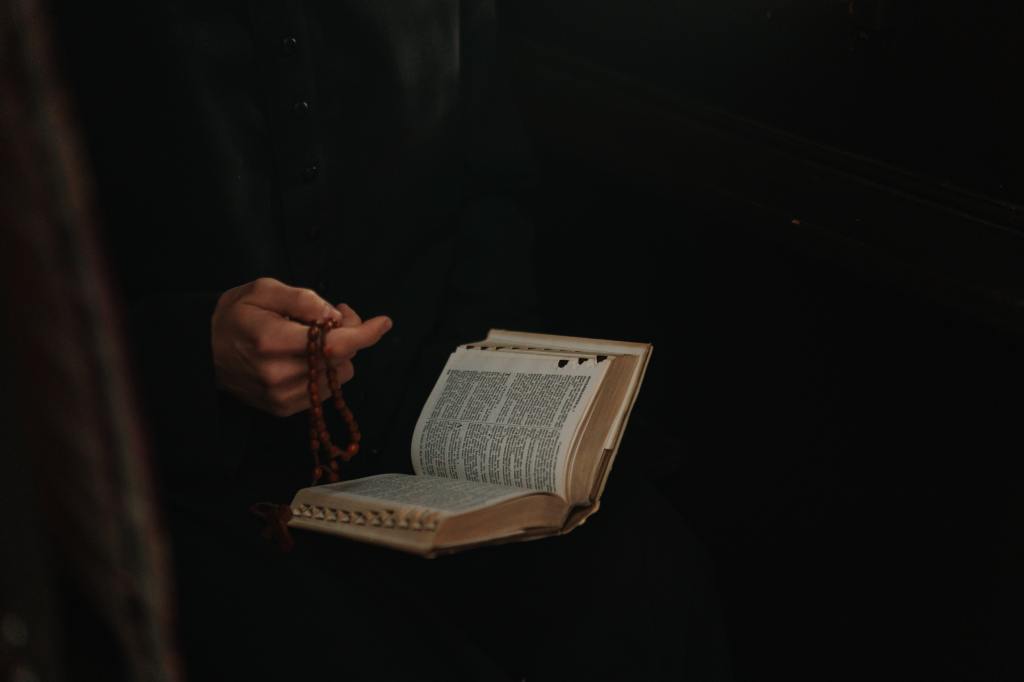
Thanks to Cottonbro Studio and Pixels
2. What the Bible Really Says About Homosexuality (Millennium Edition) ©2000 by Daniel A. Helminiak, Ph.D.; Kindle Edition
“Since the first edition of this book appeared in 1994, over 50 thousand copies have been printed. The book has sold consistently over the years. Its goal was to make available in easily readable form a summary of a growing body of scholarly literature on homosexuality in the Bible. Even in 1994, the inevitable conclusion of the scholarly research was already clear. Taken on its own terms and in its own time, the Bible nowhere condemns homosexuality as we know it today. In the meantime, scholars have continued their research, and some exciting new insights have emerged. That original conclusion holds as solid as ever. It gets ever more certain. At this point in time, it should be considered outrageous for any educated person to quote the Bible to condemn homosexuality. At the very least, the meaning of the relevant texts is so disputed that, in fairness and honesty, no one can use them that way. But even more that this, as this book shows, the fact is that the Bible offers no condemnation pertinent to today’s discussion.” From the introduction page 14
3. Boswell, John. Christianity, Social Tolerance, and Homosexuality: Gay People in Western Europe from the Beginning of the Christian Era to the Fourteenth Century (p. iii). The University of Chicago Press. Kindle Edition.
“It is not possible to write history in a vacuum. No matter how much historians and their readers may wish to avoid contaminating their understanding of the past with the values of the present, they cannot ignore the fact that both writer and reader are inevitably affected by the assumptions and beliefs of the age(s) in which they write and read. Because very many of the issues addressed in this book as historical problems are viewed today chiefly as moral questions, and because their social importance is generally supposed to result from the moral traditions regarding them, it would be impossible to present a persuasive argument for the essentially social significance of such phenomena without examining, at some length, the moral texts and opinions thought to have been determinative in establishing Western attitudes toward them.” Preface page xv
Day, D. L.. Why The Clergy Lied: A Journalist’s Academic Report on LGBTQ and Christianity, Kindle Edition. Copyright 2022
“This writing aims to build on research already done to call attention to a specific history of distortion and scapegoating that has been used to bias Christianity against LGBTQ persons. In this writing, it’s not the intention to attack churches. The Church has done enormous good carried out by persons who know how to focus on the positive aspects of Christian belief. It’s hoped the details in this book will stimulate new academic research on all sides of the topics mentioned. This book is a call for self-absolution for any who may have bought into the guilt imposed by centuries of deception and obfuscation on the part of Christian religious leaders. If the work just inspires and provides resources for a thesis and some term themes, our job will have been complete. The e-book version has scores of live links provided to encourage just such further research on all sides of the subjects included. To stimulate the acceleration of research on issues addressed here, the author may cover a few subjects in more depth than the average reader might need. Some may want to selectively move on to the next topic. Acknowledging that historically there have been some subtle differences between fundamentalists, evangelicals, and neo-evangelicals, the author notes that the recent politicization of beliefs has blurred those lines making it more difficult to differentiate. In this book series, the terms will be used individually or interchangeably to reference those who believe in a fundamentalist interpretation of scripture and in aggressive proselytizing with their faith.” from the Preface.

 God is Good